WHOOP Sleep Score: What It Means and How to Improve Your Recovery
WHOOP is popular with athletes, biohackers, and anyone serious about recovery. One of its most talked-about features is the Sleep Performance score. This number tells you how well your sleep matched what your body needed. This guide explains how WHOOP calculates that score, what counts as good, and how it compares to other sleep trackers.
Key Insight: Sleep scores are valuable tools, but understanding how they're calculated and what factors you can control is more important than achieving perfect numbers.
Understanding Sleep Scores: The Basics
Sleep scores have revolutionized how we think about sleep quality, providing a simple numerical representation of complex physiological processes that occur during sleep. These scores typically range from 0-100 and attempt to distill multiple sleep metrics into a single, easy-to-understand number.
What Sleep Scores Typically Measure:
- •Sleep Duration: Total time spent asleep, usually compared to recommended amounts for your age
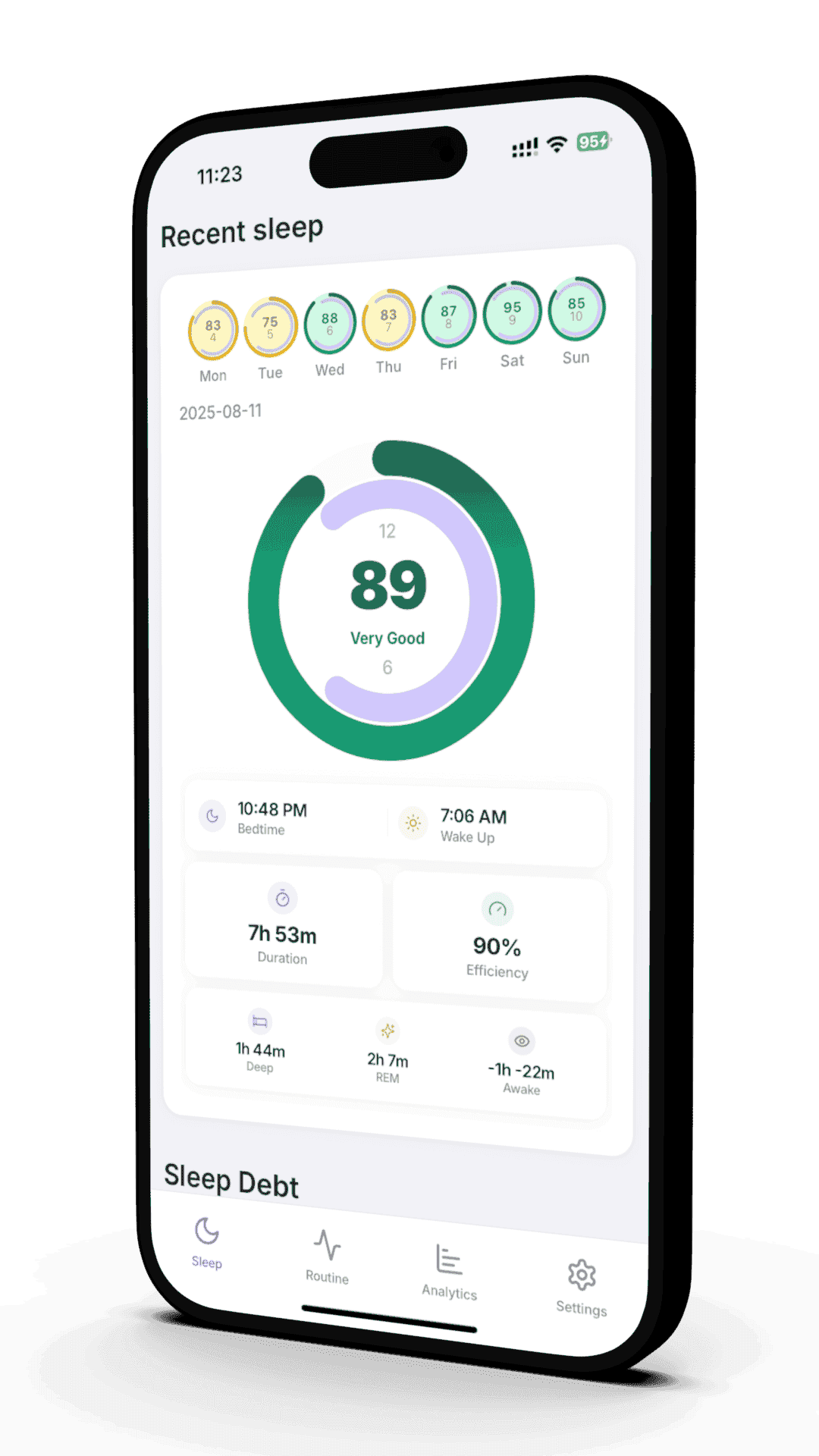
- •Sleep Efficiency: Percentage of time in bed actually spent sleeping (85%+ is considered good)
- •Sleep Stages: Time spent in light, deep, and REM sleep phases
- •Restfulness: How much you moved or were disturbed during sleep
- •Heart Rate Patterns: Heart rate variability and resting heart rate during sleep
Related: Learn more about what constitutes a good sleep score across different devices and platforms.
Benefits of Sleep Scoring
- • Simplifies complex sleep data into actionable insights
- • Helps identify patterns and trends over time
- • Motivates consistent sleep habits through gamification
- • Provides objective measurement of sleep quality
Limitations to Consider
- • Algorithms vary significantly between devices
- • May not account for individual sleep needs
- • Can create anxiety about achieving perfect scores
- • External factors often aren't considered
How Whoop Calculates
WHOOP calculates Sleep Performance as a percentage. It compares the sleep you actually got to the sleep your body needed that night. If you needed 8 hours and slept 8 hours, your sleep performance is 100%. WHOOP determines your sleep need based on your recent strain, HRV trends, and recovery history. This personalized approach sets WHOOP apart from devices that use fixed targets for everyone.
Whoop Sleep Stages
WHOOP tracks four sleep stages: slow wave sleep (deep sleep), REM sleep, light sleep, and wake. It uses a combination of heart rate variability, respiratory rate, and movement data to classify each stage. Slow wave sleep and REM sleep are weighted heavily because they drive physical and mental recovery. WHOOP gives you a breakdown of each stage every morning.
Good Whoop Score
WHOOP considers a Sleep Performance score above 85% to be in the green zone, meaning you are well recovered. Scores from 70% to 84% fall in the yellow zone, indicating moderate recovery. Below 70% is in the red zone, suggesting you need more rest. These thresholds are tied to your Strain and Recovery scores, so they shift based on how hard you have been training.
Whoop Vs Other Devices
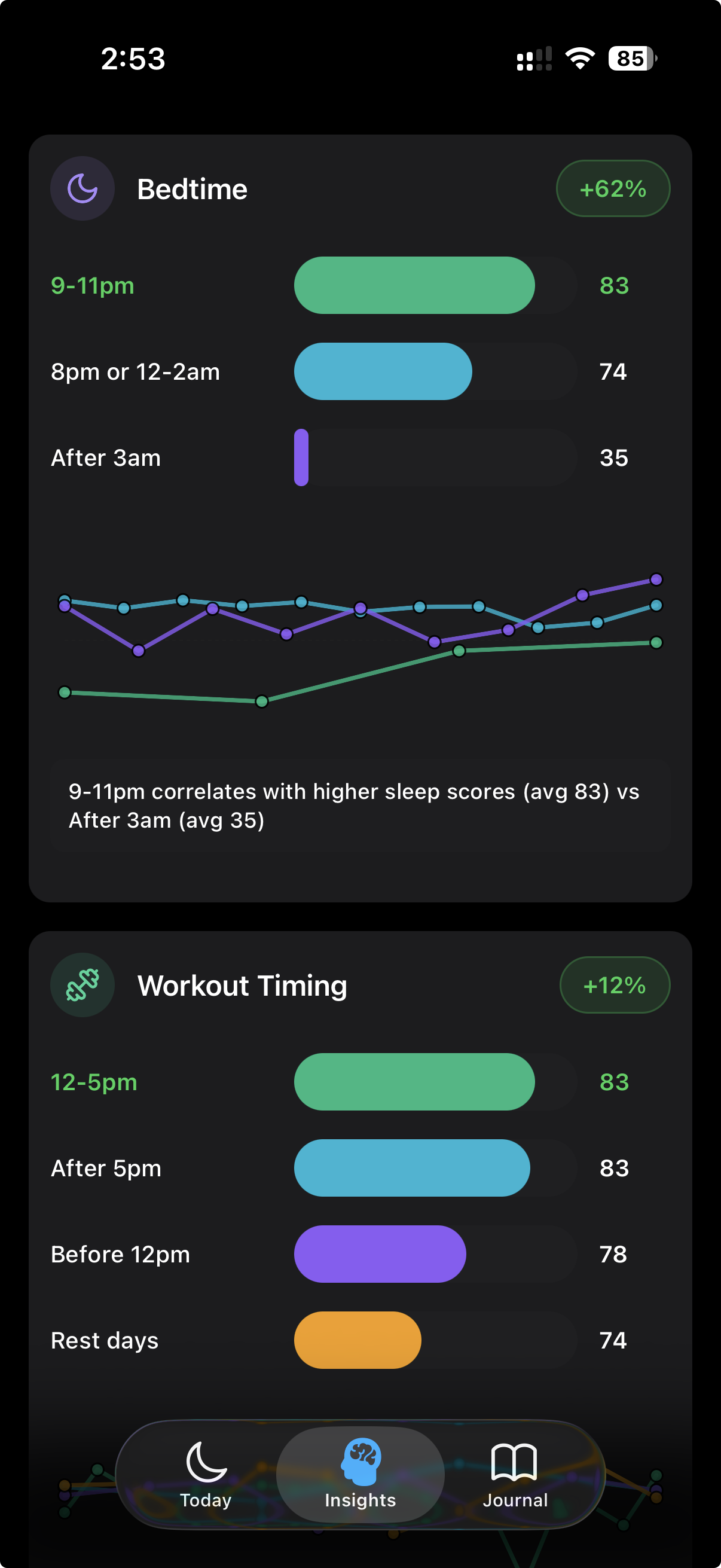
WHOOP stands out because it gives you a personalized sleep need rather than a fixed 8-hour target. This makes it especially useful for athletes whose recovery demands change day to day. Compared to Fitbit and Garmin, WHOOP focuses more on recovery than activity tracking. Compared to Apple Watch with an app like Reverie, WHOOP lacks the habit-tracking layer. Reverie connects your sleep data to daily behaviors like caffeine, exercise timing, and meal schedules.
Improving Whoop Score
To improve your WHOOP sleep score, focus on hitting your personal sleep need consistently. Keep a regular bedtime even on weekends. Limit alcohol, as WHOOP research shows alcohol significantly lowers sleep performance. Manage your training load so your sleep need does not consistently exceed what you can provide. Use WHOOP's sleep coaching feature to find your ideal bedtime window.
Limitations
WHOOP requires a monthly subscription, which is a significant ongoing cost. The band only tracks sleep and recovery, so it does not replace a smartwatch for everyday use. Like all consumer trackers, WHOOP's sleep stage detection is an estimate rather than a clinical measurement. The device also does not track daily habits like caffeine timing or meal schedules, which are major drivers of sleep quality.
Conclusion
WHOOP Sleep Performance score is one of the most personalized sleep metrics available in a consumer device. It is especially valuable for athletes who need to balance training load with recovery. Track your weekly average rather than stressing over individual nights. If you use an Apple Watch and want the habit-tracking layer that WHOOP lacks, Reverie connects your sleep data to your daily routine.
How to Improve Your Sleep Score
Regardless of which device or app you use, certain fundamental principles can help improve your sleep score. Focus on these evidence-based strategies that address the core components most sleep scoring algorithms measure.
Prioritize Sleep Consistency
Go to bed and wake up at the same time every day, including weekends. Consistency is often weighted heavily in sleep score algorithms and has the most significant impact on sleep quality. Even a 30-minute variation can affect your score.
Optimize Sleep Duration
Aim for 7-9 hours of sleep for adults, 8-10 hours for teenagers, and 9-11 hours for children. Most sleep scores heavily weight actual sleep time against recommended amounts, so consistently getting adequate sleep is crucial for higher scores.
Improve Sleep Efficiency
Sleep efficiency (time asleep vs. time in bed) above 85% is considered good. Create a relaxing bedtime routine, avoid screens before bed, and only use your bed for sleep and intimacy to improve efficiency.
Track Daily Habits
Monitor how daily activities affect your sleep score. Caffeine after 2 PM, intense exercise within 3 hours of bedtime, large meals close to sleep, and alcohol consumption can all negatively impact sleep quality and scores.
Optimizing Your Sleep Environment
Your sleep environment plays a crucial role in sleep quality, though it's not always directly measured by sleep tracking devices. Creating optimal conditions can improve both your actual sleep and your sleep score.
Temperature Control
Keep your bedroom between 65-68°F (18-20°C). A cool environment promotes deeper sleep and can improve sleep efficiency metrics that contribute to higher sleep scores.
Light Management
Use blackout curtains or eye masks to eliminate light. Even small amounts of light can disrupt sleep stages, particularly REM sleep, which is measured by most sleep scoring systems.
Noise Reduction
Use earplugs, white noise machines, or apps to mask disruptive sounds. Consistent, low-level background noise is better than intermittent loud sounds that can fragment sleep.
Comfort Optimization
Invest in a comfortable mattress and pillows that support your preferred sleep position. Discomfort leads to more movement during sleep, which can negatively affect restfulness scores.
Advanced Sleep Tracking with Reverie
While basic sleep scores provide valuable insights, advanced sleep tracking goes beyond simple metrics to help you understand the complex relationship between your daily habits and sleep quality. This is where comprehensive apps like Reverie excel.
How Reverie Enhances Sleep Scoring

Common Sleep Score Mistakes to Avoid
Many people make common mistakes when interpreting and trying to improve their sleep scores. Understanding these pitfalls can help you use sleep scores more effectively as tools for better sleep.
Avoid These Common Pitfalls
Obsessing Over Perfect Scores
Focusing too much on achieving perfect sleep scores can create anxiety that actually worsens sleep quality. Use scores as general guides, not absolute measures of health.
Comparing Scores Across Different Devices
Different devices use different algorithms, making direct score comparisons meaningless. Focus on trends within your chosen device rather than comparing with others.
Ignoring How You Actually Feel
A lower sleep score doesn't necessarily mean you had poor sleep if you feel rested and energetic. Trust your body's signals alongside the data.
Making Drastic Changes Based on Single Night Scores
Sleep scores can vary significantly night to night due to many factors. Look for patterns over weeks, not individual nights.
The Future of Sleep Scoring
Sleep scoring technology continues to evolve, with new sensors, algorithms, and approaches emerging regularly. Understanding where the field is heading can help you make informed decisions about sleep tracking investments.
Improved Sensor Technology
Next-generation wearables will include more sophisticated sensors for blood oxygen, skin temperature, and even blood glucose monitoring, providing richer data for more accurate sleep scoring.
AI-Powered Personalization
Machine learning algorithms will become better at personalizing sleep scores based on individual patterns, health conditions, and lifestyle factors, moving beyond one-size-fits-all scoring systems.
Environmental Integration
Future sleep tracking will incorporate environmental data like room temperature, humidity, air quality, and noise levels to provide more comprehensive sleep quality assessments.
Predictive Analytics
Advanced algorithms will predict sleep quality based on daily activities, helping users make real-time adjustments to optimize their sleep before bedtime.
Related Sleep Score Articles
Apple Watch Sleep Score Apps
Find the best Apple Watch sleep score apps and learn how to track your sleep quality effectively.
Fitbit Sleep Score Guide
Complete guide to understanding and improving your Fitbit Sleep Score for better sleep quality.
Oura Ring Sleep Score
Master your Oura Sleep Score with this comprehensive guide to ring-based sleep analysis.
Apple Watch Sleep Tracking Guide
Complete guide to Apple Watch sleep tracking setup, accuracy, and optimization tips.
Ready to Optimize Your Sleep Score?
Join our beta program and discover how Reverie combines Apple Watch sleep tracking with daily habit analysis to provide the most comprehensive sleep scoring available.
✓ Free beta access ✓ Advanced sleep analysis ✓ Daily habit tracking ✓ Requires Apple Watch
Join 50 beta testers already optimizing their sleep
Written by the Reverie Team
Based on sleep science research and user testing