Melatonin Supplements: Dose, Timing, and What the Science Says
Melatonin is the most misunderstood sleep supplement on the market. It is not a sedative, it does not knock you out, and the doses sold in most stores are far higher than the research ever tested. Used correctly, it is a precise tool. Used incorrectly, it can make your sleep worse.
Key Insight: The physiological dose — what your brain produces naturally — is about 0.3mg. Most commercial supplements contain 3-10mg, which floods receptors and can actually worsen sleep over time.
What Melatonin Actually Does
Melatonin is a hormone released by the pineal gland, a small structure near the center of the brain. Its job is not to put you to sleep. Its job is to tell the rest of your body that night has arrived. Think of it as a chemical signal for darkness, not a chemical sedative.
Under normal conditions, melatonin starts rising about two hours before your natural bedtime, in a window researchers call dim-light melatonin onset, or DLMO. Levels peak in the middle of the night and fall toward morning. This rise and fall is what synchronizes your internal clock with the external light cycle.
Because melatonin is a timing signal rather than a sedative, its effect feels subtle. You should not expect the heavy, drowsy pull of a prescription sleep drug. What melatonin does is quietly shift your circadian rhythm so that your body is ready for sleep at the hour you want it to be ready.
Melatonin Is Not Like Other Sleep Aids
Why Most People Dose Wrong
The single biggest mistake people make with melatonin is taking too much of it. Your pineal gland releases so little melatonin each night that the total mass across an entire evening adds up to roughly 0.3mg. That tiny amount is enough to shift your circadian clock and prepare you for sleep.
Walk into any pharmacy and you will see gummies and tablets sold at 3mg, 5mg, or even 10mg. These doses are 10 to 30 times higher than what the body produces. They are also higher than what controlled sleep studies have found to be optimal. More is not better here — in fact, larger doses often reduce the benefit.
Receptor downregulation. When you flood melatonin receptors with a large dose night after night, the receptors become less responsive. The next dose has to be higher to produce the same effect. Over weeks or months, tolerance can set in, and the supplement stops working entirely.
Regulatory gap. In the United States, melatonin is sold as a dietary supplement, which means manufacturers are not required to match the dose on the label. One 2017 analysis of 31 melatonin supplements found that actual content ranged from 17 percent below to 478 percent above the stated amount. A gummy labeled 3mg might contain close to 15mg.
When Melatonin Works (And When It Does Not)
Melatonin is a narrow tool, not a general sleep aid. The cases where it works well are cases where your internal clock is out of phase with the clock you want to keep. For other kinds of sleep problems, it is often the wrong answer.
Jet Lag
When you fly east across three or more time zones, low-dose melatonin taken at the target destination's bedtime helps pull your circadian rhythm forward. Meta-analyses show it reliably reduces jet lag symptoms when used this way.
Delayed Sleep Phase Syndrome
People whose natural sleep-onset time is 2 AM or later — a real circadian condition, not just being a night owl — benefit from small doses taken several hours before the desired bedtime. This is one of the best-supported uses of melatonin.
Shift Work
Night workers trying to sleep during the day can use melatonin to signal their bodies that it is bedtime, even when the outside world is bright. Results are modest but real.
Stress Insomnia — No
If you cannot sleep because your mind is racing, melatonin will not help. The problem is cortisol and arousal, not an out-of-phase circadian rhythm. Cognitive behavioral therapy for insomnia is the first-line treatment here.
Anxiety-Driven Insomnia — No
Anxiety disorders require their own treatment. Melatonin does not calm the nervous system the way benzodiazepines or SSRIs do, and using it as a nightly anxiety fix tends to disappoint.
How to Take Melatonin Correctly
If you have decided melatonin is the right tool for your situation, there are four rules that matter far more than the brand or the delivery format.
The Four Rules of Melatonin
- Start low.Begin with 0.3mg to 1mg. If you cannot find that dose locally, cut a 3mg tablet into quarters. Never start at 5mg or 10mg.
- Time it right.Take melatonin 30 to 90 minutes before your target sleep time. Too early and it wears off before you sleep; too late and you get a morning hangover.
- Keep lights dim after.Bright light, especially from screens, blocks the signal melatonin is trying to send. A 0.3mg dose under bright light is barely better than a placebo.
- Do not take it nightly.Use it for a specific reason — jet lag, a shift change, a disrupted schedule — and stop when the reason is gone. Chronic nightly use is where tolerance and downregulation come from.
- Avoid extended-release formulas at first.Standard immediate-release tablets match the body's natural pulse more closely. Extended-release can prolong the signal past morning and leave you groggy.
Side Effects and Long-Term Risks
Melatonin is generally considered low-risk compared with prescription sleep drugs, but it is not risk-free, and the long-term safety picture remains incomplete.
Next-Day Grogginess
High doses — anything above 1mg for most people — can linger into the morning, producing a heavy-headed feeling that lasts hours after waking. Lower doses avoid this.
Vivid Dreams and Nightmares
Melatonin can intensify REM sleep and dream content. Some users report strange, vivid, or disturbing dreams. This is reversible and stops when the supplement is stopped.
Hormonal Concerns
Melatonin interacts with reproductive hormones. Pediatric use during puberty is controversial, and most sleep medicine guidelines advise against giving melatonin to children and adolescents without a doctor's supervision.
Limited Long-Term Data
Most controlled trials run 4 to 12 weeks. There is no high-quality data on what happens with daily use over many years. Intermittent, purpose-driven use is the evidence-based approach.
Drug Interactions
Melatonin can interact with anticoagulants, immunosuppressants, and some blood pressure medications. Anyone on prescription drugs should check with a pharmacist before starting it.
Accidental Ingestion
Calls to US poison control centers for pediatric melatonin exposures rose dramatically in the last decade. Gummies that look like candy are a specific risk in homes with children.
How Reverie Helps You Test If Melatonin Is Working
The honest problem with melatonin is that most people cannot tell whether it is helping. The effect is subtle, and sleep quality varies night to night for all kinds of reasons. Without measurement, you are guessing.
Apple Watch records sleep onset latency, total sleep time, and sleep stages for every night you wear it. Those numbers are exactly the metrics a melatonin trial should move. If a supplement is working, your time to fall asleep should drop within the first few nights.
Running a Before-and-After Trial in Reverie
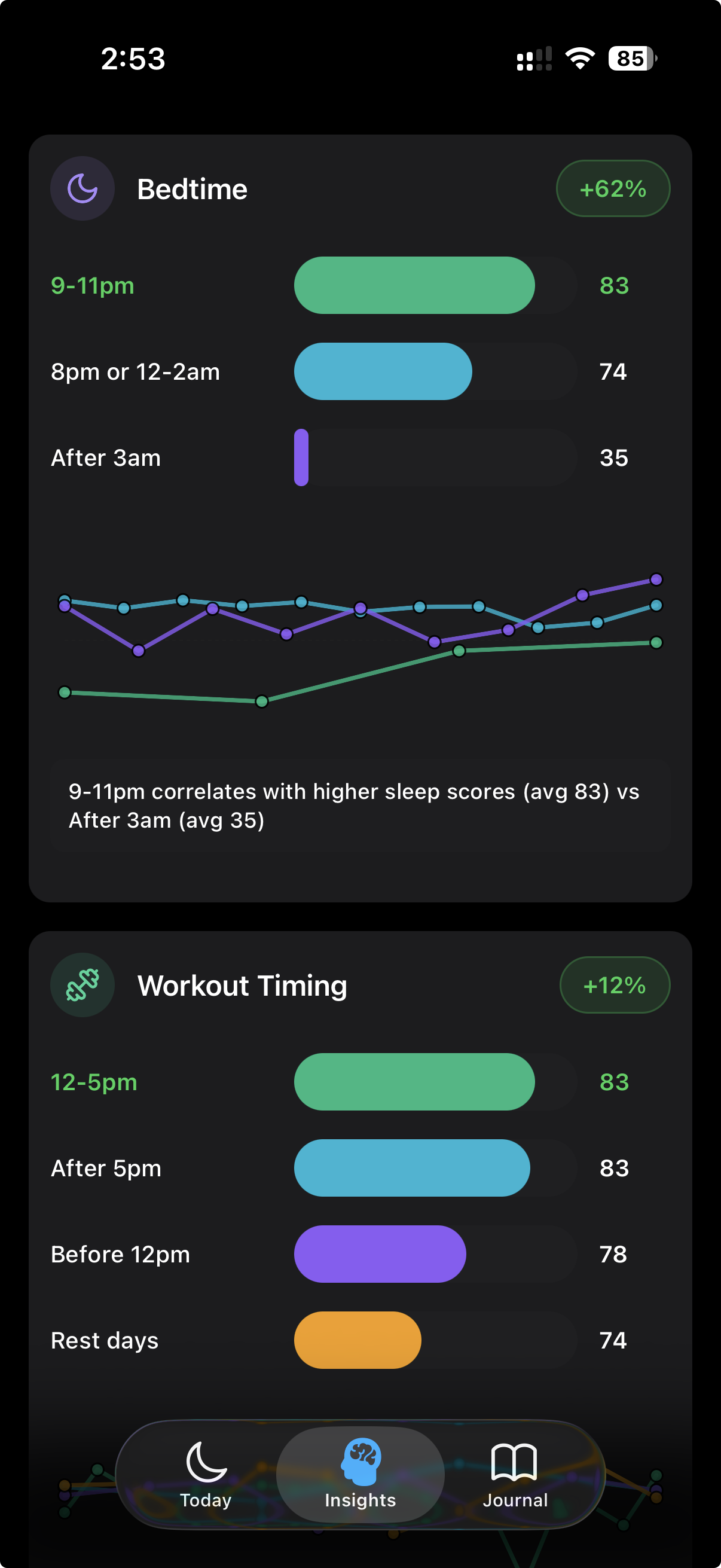
Reverie lets you tag nights with the habits and supplements you used, then compares the sleep metrics across those nights. You can see whether melatonin nights actually produce faster sleep onset and better sleep scores than melatonin-free nights.
- • Tag melatonin nights and track sleep latency changes
- • Compare average sleep score on and off the supplement
- • Spot whether tolerance is setting in over weeks
- • Decide based on your data, not the supplement marketing
References
- Brzezinski A. "Melatonin in humans." N Engl J Med. 1997;336(3):186-195. Source
- Zhdanova IV, et al. "Melatonin treatment for age-related insomnia." J Clin Endocrinol Metab. 2001;86(10):4727-4730. Source
- Ferracioli-Oda E, Qawasmi A, Bloch MH. "Meta-analysis: melatonin for the treatment of primary sleep disorders." PLoS One. 2013;8(5):e63773. Source
- Erland LA, Saxena PK. "Melatonin Natural Health Products and Supplements: Presence of Serotonin and Significant Variability of Melatonin Content." J Clin Sleep Med. 2017;13(2):275-281. Source
- Auld F, Maschauer EL, Morrison I, Skene DJ, Riha RL. "Evidence for the efficacy of melatonin in the treatment of primary adult sleep disorders." Sleep Med Rev. 2017;34:10-22. Source
Related Articles
Jet Lag Recovery
How to reset your clock faster after long-haul flights — including when melatonin actually helps.
Sleep and Anxiety
Why anxiety-driven insomnia rarely responds to melatonin, and what does work.
See If Melatonin Is Actually Helping You
Join our beta program and run a real before-and-after trial on your own sleep. Reverie turns your Apple Watch data into the evidence you need to decide.
Free beta access. Shape the product. First to get updates. Requires Apple Watch.
Written by the Reverie Team
Based on sleep research and scientific studies