Why Do You Wake Up at 3 AM? The Science Behind Mid-Night Wake-Ups
You go to bed fine. Then your eyes pop open at 3 AM and your brain switches on like a stadium light. It happens night after night, almost like the clock is doing it on purpose. There's a reason — and it has nothing to do with the time being haunted.
Key Insight: The second half of the night is naturally lighter, more REM-heavy, and more sensitive to stress hormones. That makes 3 AM the most common wake-up time for almost everyone — but a few simple changes can keep you asleep through it.
Your Sleep Gets Lighter After 3 AM
Sleep isn't one flat state. Your brain runs through cycles of about 90 minutes, and each cycle has a different mix of stages. The first cycles of the night are loaded with deep slow-wave sleep. That's the heavy, hard-to-wake stage your body uses for physical repair.
After about 3 hours, deep sleep starts to fade. The cycles after that are mostly light sleep and REM. By 3 AM, if you went to bed at 11, you're sitting in the lightest, most arousable part of your night. The same noise, bladder twinge, or stray thought that you slept through at midnight will wake you wide up at 3 AM.
If you want a deeper look at how the night is built, our breakdown of the 90-minute sleep cycle walks through every stage in order. The short version: a 3 AM wake-up isn't a glitch. It's the natural shape of your night.
Why 3 AM Specifically
Bedtime around 11 PM: Deep sleep peaks between midnight and 2 AM. By 3 AM, you've finished most of it.
REM density rises: REM episodes get longer and more frequent. REM sleep involves brain activity close to waking levels.
Body temperature dips: Core temperature hits its lowest point around 4 AM. Some people feel cold and surface from sleep.
The Cortisol Surge Starts Earlier Than You Think
Cortisol is your body's main wake-up hormone. Most people picture it kicking in with their alarm. It actually starts climbing hours earlier. Recent work on the cortisol awakening response shows cortisol begins rising well before you wake — for many sleepers, the steepest climb starts somewhere between 2 and 4 AM.
In a healthy night, that rise is gentle and you sleep right through it. If you're stressed, anxious, or sleep-deprived, the curve gets steeper and starts earlier. A jolt of cortisol while your sleep is already thin and REM-heavy can be enough to push you over the edge into full wakefulness.
This is why a stressful week often shows up as 3 AM wake-ups. Your hormones are pre-loading you for a fight that hasn't started yet. If your mind is also racing the second your eyes open, read our piece on sleep and anxiety — the loop is real and it has fixes.
Alcohol Almost Guarantees a 3 AM Wake-Up
A glass of wine helps you fall asleep. The problem comes a few hours later, when your liver finishes metabolizing it. Alcohol suppresses REM sleep in the first half of the night. Once it clears your system, your brain catches up with a phenomenon called REM rebound.
REM rebound means your brain crams in extra REM, often in chunks that are longer and more intense than usual. Studies measuring sleep after even moderate drinks show the second half of the night becomes fragmented, with more wakefulness and more stage shifts. That's a fancy way of saying your sleep gets shallow and choppy right around — you guessed it — 3 AM.
If you find that wine nights and 3 AM wake-ups travel together, they probably do. The full mechanism is in our deep dive on alcohol and sleep. The simple version: even one or two drinks within three hours of bed can carve a hole in the back half of your night.
Other Triggers People Miss
Cortisol and alcohol aren't the only suspects. There are a few quieter causes that can show up at 3 AM and get blamed on stress when they're really something else.
Blood Sugar Dips
A heavy carb meal late at night spikes insulin, which can drop your blood sugar a few hours later. Your body responds by releasing cortisol and adrenaline to push glucose back up. That rescue mission can wake you. People with insulin resistance or who skip meals during the day are especially vulnerable.
A Warm Room
Your core body temperature naturally drops at night. If your bedroom is too warm, your body can't cool down enough, and that thermal stress fragments REM. Most sleep researchers point to a bedroom around 65 to 68°F. The full case is in our guide on bedroom temperature.
Bladder and Hydration
Drinking water within 90 minutes of bed almost always means at least one trip up. Caffeine and alcohol both act as mild diuretics. The wake-up is your bladder, but if it lands inside an already-light cycle, you'll struggle to fall back asleep.
Age
Deep sleep shrinks as you get older. By your 50s and 60s, you may have half the deep sleep you had at 20. With less of that hard-to-wake stage cushioning the night, sleep becomes more fragmented and 3 AM wake-ups become more common.
Anxious Thoughts
REM is the dream stage. It's also the stage your brain uses to process emotion. If you go to bed with unresolved worry, REM can pull it to the surface. You wake into a thought spiral that feels worse at 3 AM than it would in daylight, partly because the prefrontal "brakes" of your brain aren't fully online yet.
REM Rebound from Stimulants
Caffeine has a half-life of about five hours. A 3 PM coffee still has measurable caffeine in your blood at midnight. As it clears, your sleep architecture wobbles, often producing a thin, easily disturbed second half of the night.
What to Do When You Wake Up at 3 AM
The single biggest mistake is staying in bed and trying to force yourself back to sleep. Your brain learns. If you spend an hour every night staring at the ceiling and thinking, your bed becomes a place for staring at the ceiling and thinking. That's how short-term wake-ups turn into chronic insomnia.
The 20-Minute Rule
- If you're awake more than 20 minutes:Get out of bed. Don't check the time after this — guessing is fine.
- Go somewhere dim and boring:Couch with one lamp. Read something dull on paper. No phone, no laptop, no email.
- Wait for the wave:Stay there until you feel sleepy again. Then go back to bed. This usually takes 20 to 40 minutes.
- Skip the math:Don't calculate "how much sleep can I still get if I fall asleep right now." That math is itself a stressor.
- Keep your wake time fixed:Even after a rough night, get up at your usual time. Sleeping in trains your body to expect another fragmented night.
Long term, the fixes are upstream. Cut alcohol within three hours of bed. Stop caffeine after 2 PM. Eat your last meal at least two hours before sleep. Keep the bedroom cool. Get morning sunlight to anchor your circadian rhythm. None of these is dramatic on its own. Stacked together, they reshape the back half of your night.
When to See a Doctor
Occasional 3 AM wake-ups are normal. Adults wake briefly several times a night and don't even remember it. The pattern crosses a line when it interferes with your day or won't quit on its own.
Sleep maintenance insomnia is the clinical name for trouble staying asleep. The standard threshold from the DSM-5 is sleep difficulty at least three nights a week for at least three months, with daytime impact like fatigue, mood problems, or trouble focusing. If that's you, it's worth a conversation with your doctor or a sleep specialist.
Other red flags worth taking seriously: loud snoring with gasping (possible sleep apnea), waking with a racing heart most nights, or wake-ups that come with sweats or chest pain. Those need evaluation, not just better sleep hygiene. Cognitive Behavioral Therapy for Insomnia (CBT-I) is the first-line treatment and works better than sleeping pills for most people.
How Reverie Helps You Spot the Pattern
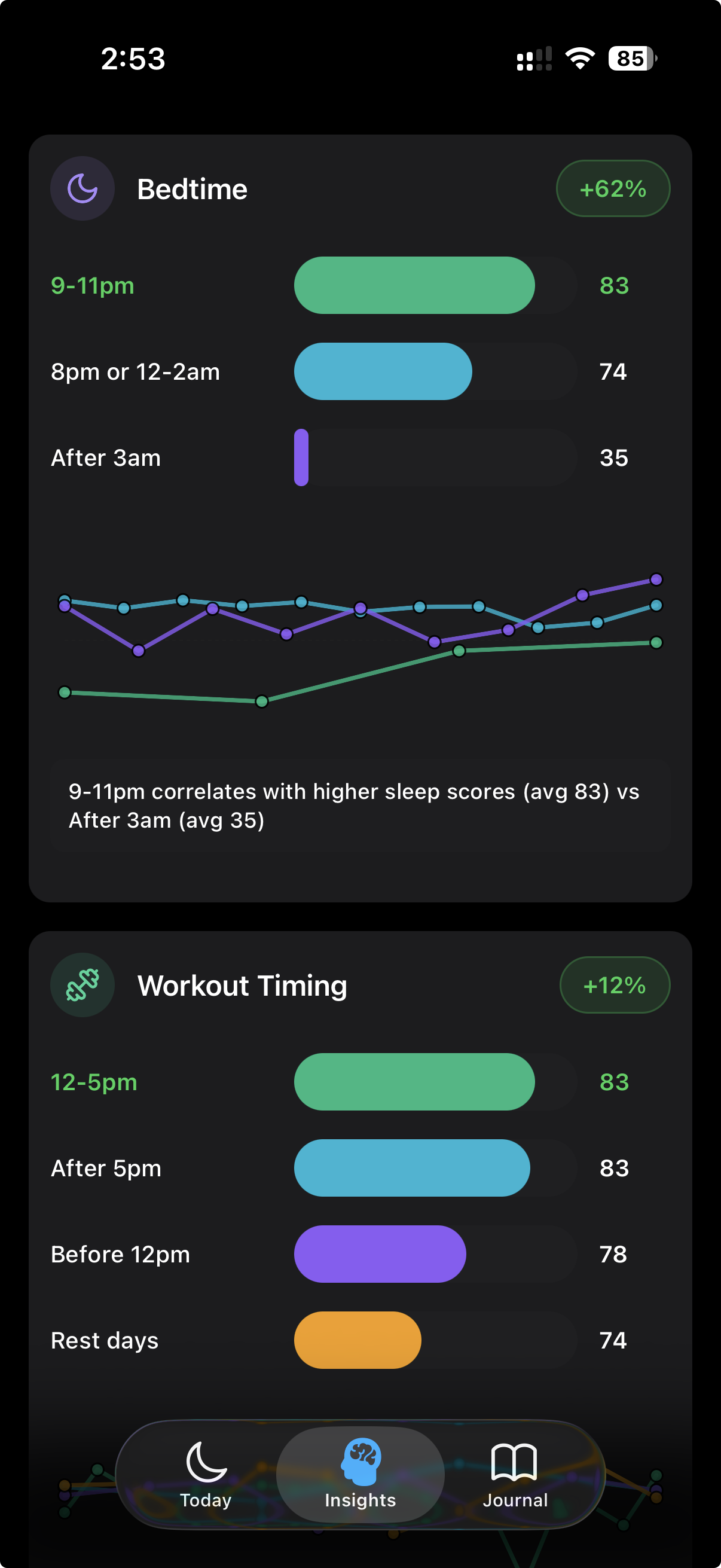
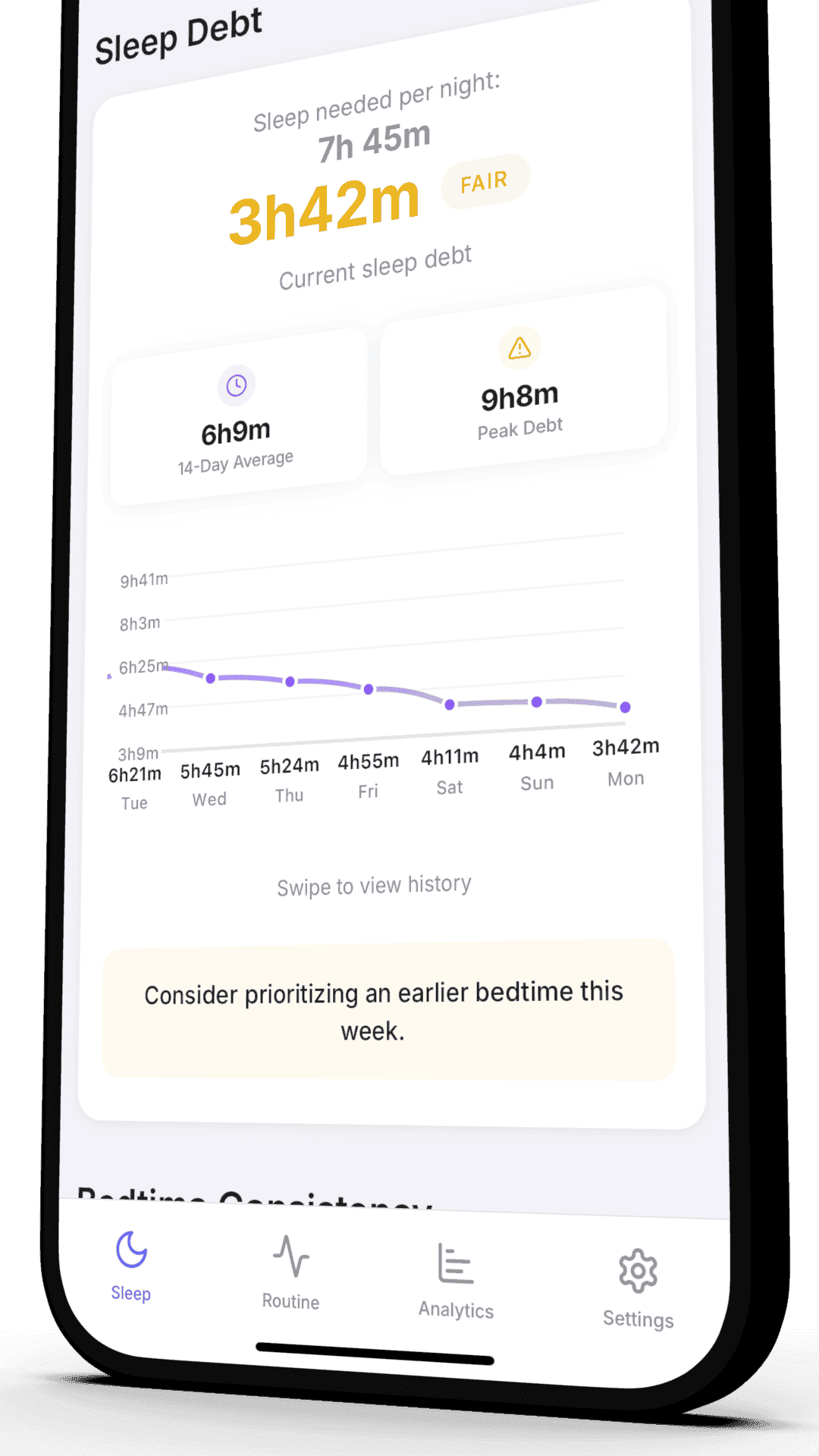
Reverie reads your Apple Watch sleep data and shows you exactly when in the night you wake up — so you can see whether 3 AM is really your trouble window or whether it just feels that way.
- • See every wake-up plotted across your night
- • Tag drinks, late meals, and stress to see what's driving fragmentation
- • Spot the difference between a noisy room and true insomnia
- • Get a sleep score that rewards uninterrupted sleep
References
- Hucklebridge F, et al. "The cortisol awakening response: Fact or fiction?" Psychoneuroendocrinology. 2025. PubMed Central
- Mohd Azmi NAS, et al. "Sleep and Circadian Regulation of Cortisol: A Short Review." Current Opinion in Endocrine and Metabolic Research. 2022. PubMed Central
- Ebrahim IO, et al. "Alcohol and sleep I: effects on normal sleep." Alcohol Clin Exp Res. 2013;37(4):539-549. PubMed
- Colrain IM, Nicholas CL, Baker FC. "Alcohol and the Sleeping Brain." Handbook of Clinical Neurology. 2014. PubMed Central
- American Psychiatric Association. Diagnostic and Statistical Manual of Mental Disorders (DSM-5). Insomnia Disorder Criteria. 2013. NCBI Bookshelf
- Sleep Foundation. "Waking Up in the Middle of the Night." Sleep Foundation
Related Articles
The 90-Minute Sleep Cycle Explained
Why the back half of your night is naturally lighter and easier to wake from.
Sleep and Anxiety: Breaking the Loop
How racing thoughts hijack the lighter half of the night, and what to do about it.
See When You Actually Wake Up
Join the Reverie beta and get a clear picture of your wake-ups, your habits, and the patterns connecting them. Built for Apple Watch.
Free beta access. Shape the product. First to get updates. Requires Apple Watch.
Written by the Reverie Team
Based on sleep research and scientific studies