Caffeine Half Life: When Your Last Coffee Should Be
Caffeine's half-life is the time it takes your body to clear half of the caffeine you drank. In most adults that's about 4 to 6 hours, but it can be as short as 2 hours or as long as 12. So half of your afternoon coffee may still be in your blood when you get into bed.
This guide is narrower than our main article on caffeine and sleep, which covers how caffeine blocks sleep pressure and what it does to your sleep stages. Here we stick to the clock. You'll learn the simple math behind half-life, walk through a 200 mg dose at 3 pm, and see why your half-life might be very different from your friend's.
By the end, you'll be able to work out your own cutoff time without needing a calculator app.
Key Insight: In most adults caffeine's half-life is about 4–6 hours, so half of a 3 pm coffee is often still in your blood around 8 or 9 pm. A 2023 meta-analysis suggests stopping a normal coffee at least 8.8 hours before bed, and a 200 mg dose about 13 hours before.
What does caffeine half-life actually mean?
Half-life is a measure of how fast your body clears a substance. After one half-life, 50% of the caffeine is gone. After two, 75% is gone. After three, 87.5% is gone. It never drops off a cliff. It fades a little more each hour.
For caffeine, the usual number is about 4 to 6 hours. A 2018 review in Nutrients put the full range in adults at 2 to 12 hours, with an average of 4 to 6 (Southward et al., 2018). That's a big spread, and it's the main reason one person can sleep fine after an evening espresso while another lies awake after a lunchtime latte.
Your liver does almost all of the work. One enzyme, called CYP1A2, breaks down about 95% of the caffeine you take in (Nehlig, 2018). Anything that speeds up or slows down that enzyme changes your half-life.
Feeling it vs. having it
The buzz you feel and the caffeine in your blood aren't the same thing. The alert feeling may fade after a few hours, but the caffeine left over can still make your sleep lighter and shorter.
How long does caffeine last? A 200 mg at 3 pm example
Let's say you drink 200 mg of caffeine at 3 pm. That's about the amount in a large drip coffee or two espresso shots. You plan to sleep at 11 pm. Here's roughly how much is still in your body, depending on your half-life.
| Time | Fast clearer (3 h half-life) | Typical (5 h half-life) | Slow clearer (8 h half-life) |
|---|---|---|---|
| 3 pm | 200 mg | 200 mg | 200 mg |
| 6 pm | 100 mg | 132 mg | 154 mg |
| 9 pm | 50 mg | 87 mg | 119 mg |
| 11 pm (bedtime) | 31 mg | 66 mg | 100 mg |
| 3 am | 13 mg | 38 mg | 71 mg |
Try it with your own numbers. Move the sliders to match your usual drink, the time you have it, and your bedtime.
How much caffeine is still in you at bedtime?
Look at the bedtime row. A typical person goes to bed with about a third of that coffee still in them. That's more caffeine than a can of cola. A slow clearer goes to bed with half the original dose, about the same as a fresh shot of espresso.
In real life, caffeine isn't absorbed all at once. Caffeine pills usually peak in your blood about an hour after you swallow them, and caffeine gum peaks in about 30 minutes (Southward et al., 2018). So the true numbers run a little later than the table shows, which makes the bedtime picture slightly worse, not better.
How long does caffeine keep you awake?
Even if you fall asleep fine, caffeine can still change the night you get. That's the part most people miss. You can feel sleepy and still lose sleep you never notice losing.
Research spotlight: Drake et al., 2013, Journal of Clinical Sleep Medicine
Researchers gave people 400 mg of caffeine either at bedtime, 3 hours before bed, or 6 hours before bed, and compared it with a placebo. All three timings disturbed sleep, including the dose taken 6 hours before bed. The authors concluded that a large dose of caffeine should be avoided for at least 6 hours before bedtime (Drake et al., 2013).
A larger 2023 review pulled together 24 studies. On average, caffeine cut total sleep by about 45 minutes and lowered sleep efficiency by 7%. It added about 9 minutes to the time it took to fall asleep and about 12 minutes of time awake during the night (Gardiner et al., 2023).
It also took about 11 minutes away from deep sleep, the stage your body uses for physical repair. If you're curious why that matters, see our guide on how much deep sleep you need. The extra minutes it takes to doze off also push you past the healthy sleep latency range.
What's the right caffeine cutoff time?
The 2023 review didn't stop at averages. It also estimated how far before bed you'd need to stop to avoid losing total sleep time. The answer depends on the dose (Gardiner et al., 2023).
Suggested minimum gaps before bedtime
- • A standard cup of coffee (about 107 mg): at least 8.8 hours before bed.
- • A standard scoop of pre-workout (about 217.5 mg): at least 13.2 hours before bed.
Your latest caffeine time
Now go back to our example. A 200 mg drink is close to that pre-workout dose. With an 11 pm bedtime, 13.2 hours earlier is about 9:48 am. Your 3 pm coffee is only 8 hours before bed, well short of that. Even a smaller 107 mg cup would need to be finished by about 2:12 pm.
This hits people who train after work especially hard. A big pre-workout dose at 6 pm is still very active at midnight. If you exercise in the evening, our guide on exercise and sleep timing has ideas for training late without wrecking your night.
Treat it as a starting point
The researchers said these cutoffs are a starting point, not a rule. Your genes, hormones and medicines can move your own cutoff hours earlier or later.
What changes your caffeine half-life?
Because one liver enzyme does almost all the work, a handful of things can change your half-life a lot. A 2022 analysis of 141 caffeine studies found that smoking, birth control pills, liver disease and certain drugs had the clearest effects (Grzegorzewski et al., 2022).
Genetics
Small differences in the CYP1A2 gene sort people into "fast" and "slow" caffeine metabolizers. Slow metabolizers are likely to have a longer half-life (Southward et al., 2018). A twin study cited in the 2022 analysis linked most of the person-to-person differences in caffeine levels to genes.
Pregnancy
Caffeine clears much more slowly during pregnancy. A 1983 study found clearly slower caffeine elimination in pregnant women, with levels back to normal by about 4 days after birth (Brazier et al., 1983). A 2016 study of 59 women found caffeine metabolism slowed during pregnancy, with the biggest change in the third trimester (Yu et al., 2016).
Birth control pills
Oral contraceptives slow down how fast caffeine leaves your body over a wide range of doses (Grzegorzewski et al., 2022). If you started the pill and suddenly sleep worse after afternoon coffee, this could be why.
Smoking
Smoking does the opposite. It speeds up caffeine clearance and shortens the half-life (Grzegorzewski et al., 2022). That also means people who quit smoking may find the same coffee hits harder and lasts longer than it used to.
Medications and liver health
Some drugs block the enzyme that breaks down caffeine. The 2022 analysis named the antidepressant fluvoxamine and the antibiotics norfloxacin and pipemidic acid as examples. Liver cirrhosis had moderate to strong effects, sometimes cutting caffeine clearance by half or more (Grzegorzewski et al., 2022).
Talk to your doctor
If you're pregnant, trying to get pregnant, breastfeeding, have liver disease, or take a prescription medicine, ask your doctor or pharmacist how much caffeine is right for you. The FDA gives the same advice. And if you still have trouble sleeping after cutting caffeine, or you have a racing heart, chest pain or bad anxiety after small amounts, get checked by a doctor.
How to work out your own cutoff (a DIY caffeine half-life calculator)
You don't need an app. The math behind every caffeine half-life calculator is one line: caffeine left = dose × 0.5^(hours passed ÷ half-life). Here's how to use it without a calculator.
Find your personal caffeine cutoff
1. Pick a half-life
Start with 5 hours. Use a longer number (8 or more) if you're on the pill, pregnant, take a medicine that slows caffeine clearance, or know that coffee hits you hard.
2. Count the half-lives
Count the hours from your drink to your bedtime, then divide by your half-life. For a 3 pm coffee, an 11 pm bedtime and a 5-hour half-life, that's 8 ÷ 5 = 1.6 half-lives.
3. Halve the dose that many times
One half-life leaves 50%. Two leave 25%. 1.6 lands in between, at about a third. So 200 mg becomes roughly 66 mg at bedtime.
4. Check it against the research
Then compare your timing with the 2023 review: about 9 hours for a normal coffee, about 13 hours for a 200 mg dose. If you're short, move your last cup earlier or make it smaller.
5. Test it for two weeks
Keep your cutoff steady for at least two weeks and note how you sleep. Track how long it takes to fall asleep, how often you wake up, and how rested you feel. Then try a cutoff one or two hours earlier and compare.
If you use an Apple Watch, it helps to log your caffeine next to your sleep data so the pattern is easy to spot. A habit journal like the one in Reverie lets you compare nights with late caffeine against nights without it, side by side with your sleep efficiency.
Frequently Asked Questions
What is the half-life of caffeine?
In most healthy adults, the half-life of caffeine is about 4 to 6 hours. The full range is wider, roughly 2 to 12 hours, depending on genes, pregnancy, birth control pills, smoking, liver health and some medicines.
How long does caffeine stay in your system?
It takes about five half-lives for nearly all of it to clear, so for a typical 5-hour half-life that's roughly a day. Most of the effect on sleep comes from what's left in the first 8 to 12 hours, though.
Is 2 pm too late for coffee?
For many people with a 10 or 11 pm bedtime, a normal cup at 2 pm is close to the limit. A 2023 meta-analysis suggested stopping a standard coffee at least 8.8 hours before bed. Larger doses, around 200 mg, needed about 13 hours.
Why can some people drink coffee at night and still sleep?
Some people clear caffeine much faster because of their genes, or because smoking speeds up the liver enzyme that breaks it down. Also, falling asleep isn't the whole story. Research shows caffeine can cut deep sleep and total sleep even when you don't notice it.
Does decaf have caffeine?
Yes, decaf usually has a small amount of caffeine, much less than regular coffee. For most people that small amount is unlikely to matter for sleep, but very sensitive people may want to skip it late in the day too.
References
- Gardiner C, Weakley J, Burke LM, et al. The effect of caffeine on subsequent sleep: A systematic review and meta-analysis. Sleep Medicine Reviews. 2023;69:101764. Source
- Drake C, Roehrs T, Shambroom J, Roth T. Caffeine effects on sleep taken 0, 3, or 6 hours before going to bed. Journal of Clinical Sleep Medicine. 2013;9(11):1195-1200. Source
- Southward K, Rutherfurd-Markwick K, Badenhorst C, Ali A. The Role of Genetics in Moderating the Inter-Individual Differences in the Ergogenicity of Caffeine. Nutrients. 2018;10(10):1352. Source
- Grzegorzewski J, Bartsch F, Köller A, König M. Pharmacokinetics of Caffeine: A Systematic Analysis of Reported Data for Application in Metabolic Phenotyping and Liver Function Testing. Frontiers in Pharmacology. 2022;12:752826. Source
- Nehlig A. Interindividual Differences in Caffeine Metabolism and Factors Driving Caffeine Consumption. Pharmacological Reviews. 2018;70(2):384-411. Source
- Yu T, et al. Pregnancy-Induced Changes in the Pharmacokinetics of Caffeine and Its Metabolites. The Journal of Clinical Pharmacology. 2016;56(5):590-596. Source
- Brazier JL, Ritter J, Berland M, Khenfer D, Faucon G. Pharmacokinetics of caffeine during and after pregnancy. Developmental Pharmacology and Therapeutics. 1983;6(5):315-322. Source
- U.S. Food and Drug Administration. Spilling the Beans: How Much Caffeine Is Too Much? FDA Consumer Updates. 2024. Source
Related Articles
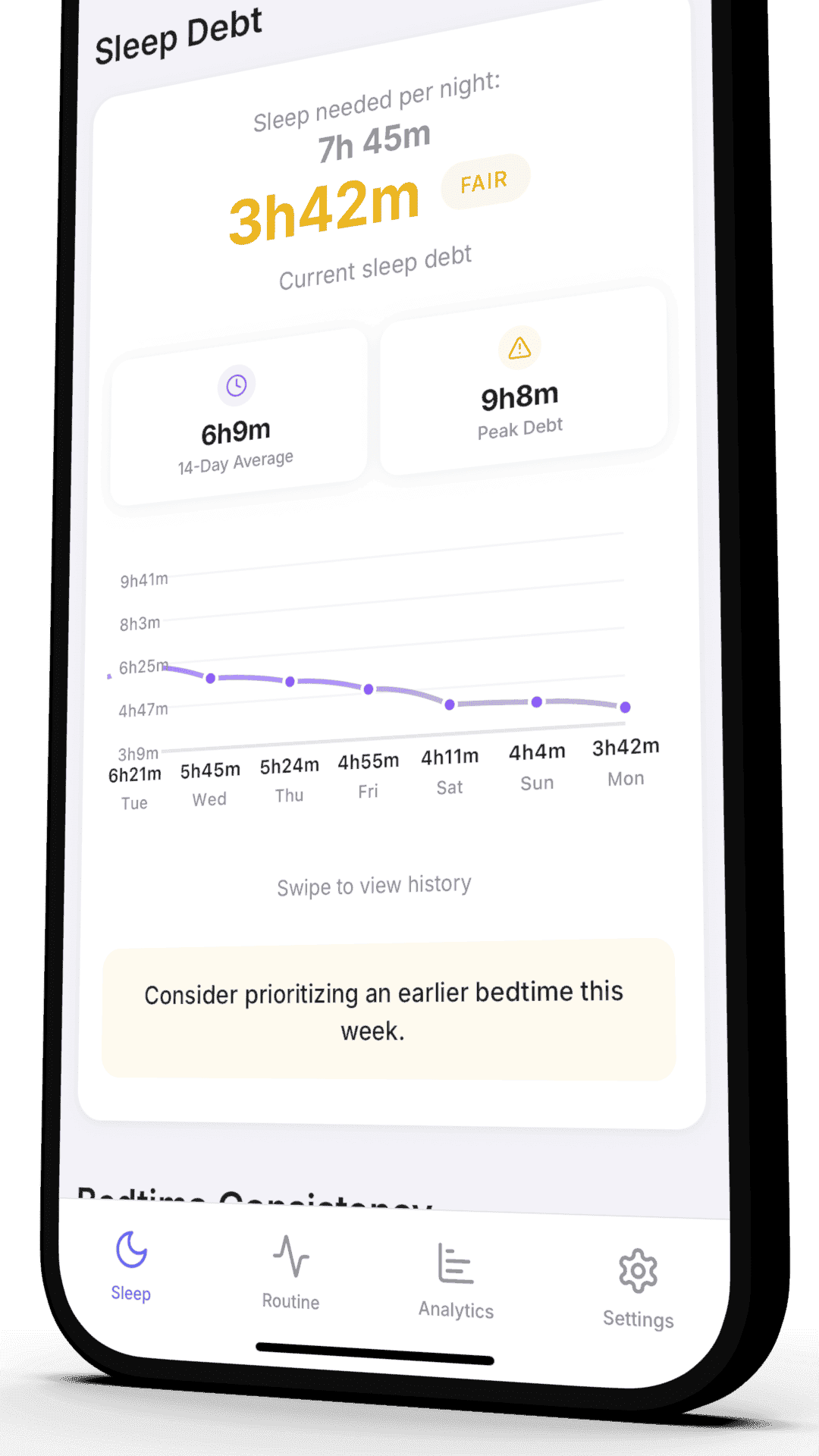
Caffeine and Sleep: The Science of Coffee's 6-Hour Half-Life
Caffeine consumed 6 hours before bed still cuts an hour of sleep. Learn the science of caffeine's half-life, individual sensitivity, and when to have your last coffee.
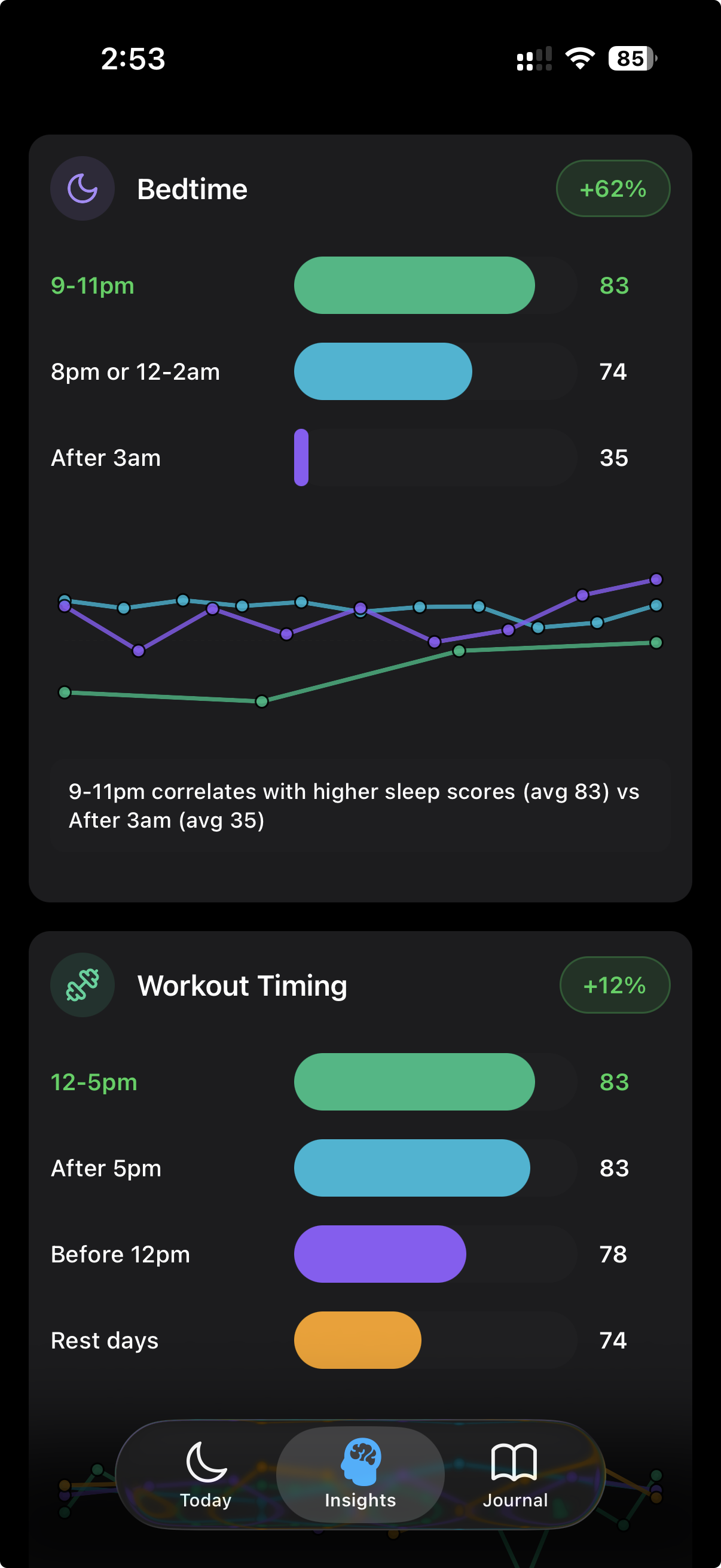
How Much Deep Sleep Do You Need? What Science Says
Deep sleep is the most restorative sleep stage. Learn how much deep sleep adults need each night, why it matters, and how to get more of it.
Sleep Latency Explained: The 15-Minute Sweet Spot
Falling asleep in under 8 minutes can mean sleep debt; over 30 minutes can mean insomnia. Learn the ideal range and how to track sleep latency.
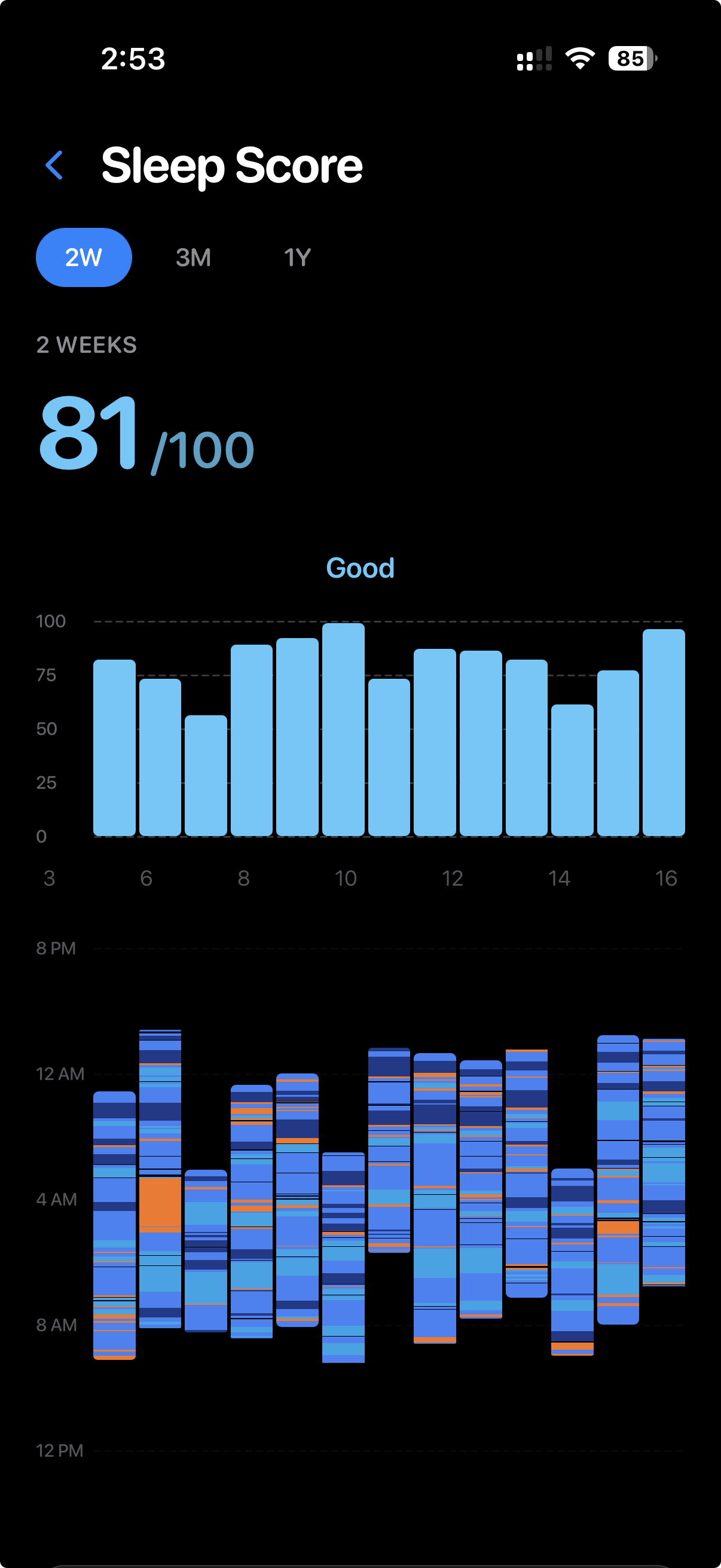
Exercise and Sleep: When to Work Out for Better Recovery
Exercise is one of the most effective tools for better sleep — but timing matters. Learn how morning, afternoon, and evening workouts affect your sleep stages differently.
Find your own caffeine cutoff
Log your coffee in Reverie's habit journal and see how late caffeine lines up with your Sleep Score and Recovery Score on your Apple Watch. After a couple of weeks, you'll see the cutoff that works for you.
Free to download. Sleep, Recovery and Strain scores. Requires Apple Watch.
Written by the Reverie Team
Based on published sleep research. This article is for general information and isn't medical advice — talk to a doctor about persistent sleep problems.