How Much Deep Sleep Do You Need? What Science Says
Deep sleep is the most restorative stage of the night. Your body repairs itself, builds muscle, and strengthens your immune system during this time. But most people have no idea how much they are getting.
Key Insight: Most adults get 13% to 23% of their sleep as deep sleep. For an 8-hour night, that is about 60 to 110 minutes.
What Is Deep Sleep?
Deep sleep is also called N3 or slow-wave sleep. It is the third stage of the sleep cycle. During this stage, your brain produces slow, high-amplitude waves called delta waves. These waves are a sign that your brain and body are in deep recovery mode.
Your breathing slows. Your muscles relax. Your body releases growth hormone, which helps repair tissue and build muscle. Your immune system also gets a boost during this time.
Deep sleep is the hardest stage to wake up from. If someone wakes you during deep sleep, you will feel groggy and disoriented for several minutes. This is called sleep inertia.
The Sleep Cycle at a Glance
How Much Deep Sleep Do Adults Need?
Most adults get 13% to 23% of their total sleep as deep sleep. For someone sleeping 8 hours, that equals about 60 to 110 minutes of deep sleep per night. The National Sleep Foundation recommends 7 to 9 hours of total sleep for adults.
Deep sleep happens mostly in the first half of the night. The first 90-minute sleep cycle usually contains the most deep sleep. As the night goes on, deep sleep gets shorter and REM sleep gets longer.
Deep Sleep and Aging
You naturally get less deep sleep as you age. Teenagers can spend up to 20% of their sleep in deep sleep. By age 65, many people get less than 10%. This is a normal part of aging, but it makes protecting your sleep quality even more important as you get older.
Why Deep Sleep Matters
Deep sleep does more than rest your body. It is when your brain and body do their most important repair work. Here is what science says happens during deep sleep.
Physical Recovery
Your body releases most of its daily growth hormone during deep sleep. This hormone repairs damaged tissue, builds muscle, and helps you recover from exercise. Without enough deep sleep, your body cannot fully heal itself overnight.
Memory Consolidation
Studies show that deep sleep helps transfer short-term memories into long-term storage. This process is called memory consolidation. People who get more deep sleep tend to remember more of what they learned the day before. Cutting short your deep sleep can hurt your ability to retain new information.
Emotional Regulation
A lack of deep sleep is linked to irritability, anxiety, and difficulty managing stress. Your brain processes emotional experiences during sleep. Without enough deep sleep, you are more likely to overreact to negative events the next day.
Metabolic Health
Research published in PNAS found that people with disrupted deep sleep had higher blood sugar levels the following day. Poor deep sleep over time is linked to insulin resistance, which raises the risk of type 2 diabetes. Deep sleep helps your body regulate glucose and insulin more effectively.
What Reduces Deep Sleep?
Several common habits can reduce how much deep sleep you get. Some of these may surprise you.
Alcohol
Alcohol may help you fall asleep faster, but it reduces deep sleep quality in the second half of the night. Even moderate drinking cuts the amount of slow-wave sleep you get.
Caffeine Too Late
Caffeine blocks adenosine, the brain chemical that builds sleep pressure. Caffeine consumed in the afternoon can still be active in your system at bedtime, making it harder to reach deep sleep.
Irregular Sleep Schedule
Going to bed and waking up at different times disrupts your body clock (also called your circadian rhythm). This makes it harder for your body to enter and sustain deep sleep stages.
Blue Light Before Bed
Screens emit blue light, which suppresses melatonin. Melatonin is the hormone that tells your brain it is time to sleep. Less melatonin means a later, lighter sleep start and less time in deep sleep.
High Stress and Cortisol
Stress raises cortisol levels. Cortisol is a hormone that keeps your body alert. High cortisol at night competes with deep sleep and makes it harder to stay in the slow-wave stage.
Aging
As you age, the brain naturally produces fewer sleep-promoting slow waves. This is a biological change you cannot fully reverse. But good sleep habits can help slow the decline.
How to Get More Deep Sleep
You cannot force deep sleep. But you can remove the things that block it and build habits that support it. Here are the strategies with the strongest evidence.
Evidence-Based Deep Sleep Habits
- Keep a regular sleep schedule.Go to bed and wake up at the same time every day, even on weekends. This trains your body clock to enter deep sleep at the right time.
- Cool your bedroom.A room temperature of 65 to 68 degrees Fahrenheit (18 to 20 degrees Celsius) supports deep sleep. Your core body temperature needs to drop to enter deep sleep.
- Avoid alcohol and caffeine late in the day.Skip caffeine after 2 PM and limit alcohol within 3 hours of bedtime.
- Exercise regularly.Physical activity increases deep sleep duration. But finish exercise at least 3 hours before bed. Late workouts raise body temperature and cortisol, which can delay sleep onset.
- Limit screens before bed.Put away phones and tablets at least 1 hour before you want to fall asleep. This lets melatonin rise naturally.
- Reduce stress in the evenings.Try light stretching, journaling, or breathing exercises to lower cortisol before bed. A calm nervous system makes it easier to reach deep sleep.
How Apple Watch Tracks Deep Sleep
Apple Watch Series 3 and later can track sleep duration using motion detection. Apple Watch Series 4 and later added heart rate monitoring during sleep. With watchOS 9, Apple added sleep stage detection for Series 4 and newer models.
The built-in Apple Health app shows your sleep stages. But it does not explain what is causing your deep sleep to be high or low. It stores the data without helping you act on it.
How Reverie Adds Context
Reverie reads your Apple Watch sleep data and connects it to your daily habits. It shows you a full breakdown of your sleep stages, including deep sleep percentage. More importantly, it shows you which habits are affecting those numbers.
- • See your deep sleep percentage each night
- • Track how caffeine timing affects your deep sleep
- • See how exercise improves your slow-wave sleep
- • Get a sleep score that accounts for deep sleep quality
References
- Hirshkowitz M, et al. "National Sleep Foundation's sleep time duration recommendations." Sleep Health. 2015;1(1):40-43. Source
- Dijk DJ. "Regulation and functional correlates of slow wave sleep." J Clin Sleep Med. 2009;5(2 Suppl):S6-S15. Source
- Mander BA, et al. "Sleep and human aging." Neuron. 2017;94(1):19-36. Source
- Tasali E, et al. "Slow-wave sleep and the risk of type 2 diabetes in humans." PNAS. 2008;105(3):1044-1049. Source
- Plihal W, Born J. "Effects of early and late nocturnal sleep on declarative and procedural memory." J Cogn Neurosci. 1997;9(4):534-547. Source
- Roehrs TA, et al. "Ethanol as a hypnotic in insomniacs." Neuropsychopharmacology. 1999;20(3):279-286. Source
Related Articles
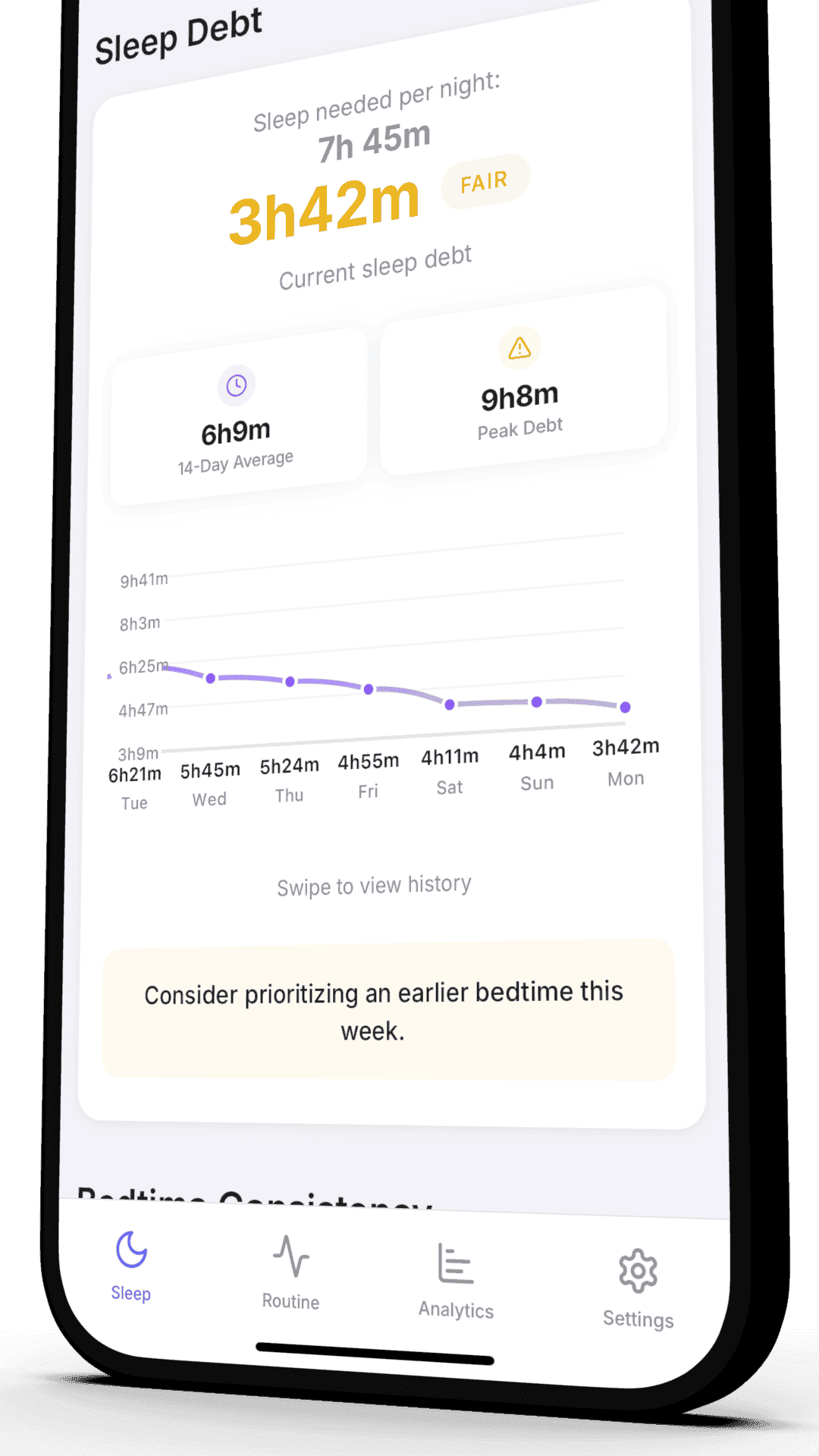
The Hidden Cost of Sleep Debt
Learn how sleep debt builds up and what it does to your brain and body.
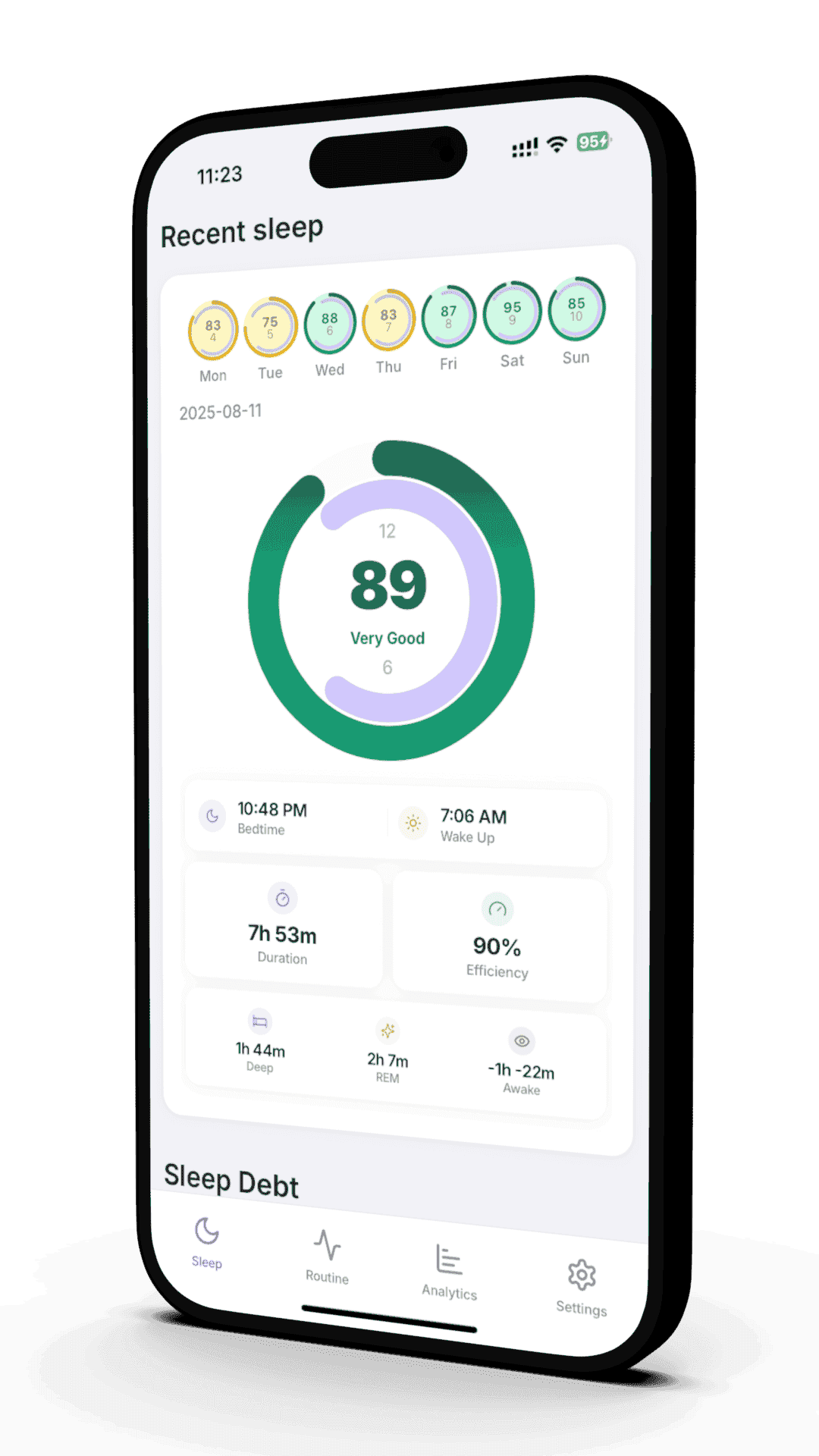
Complete Guide to Apple Watch Sleep Tracking
Setup, accuracy tips, and how to get the most from your Apple Watch.
Ready to Optimize Your Sleep?
Join our beta program and discover what is affecting your sleep quality. Get personalized insights and build better sleep habits with Reverie.
Free beta access. Shape the product. First to get updates. Requires Apple Watch.
Join 50 beta testers already improving their sleep
Written by the Reverie Team
Based on sleep research and scientific studies